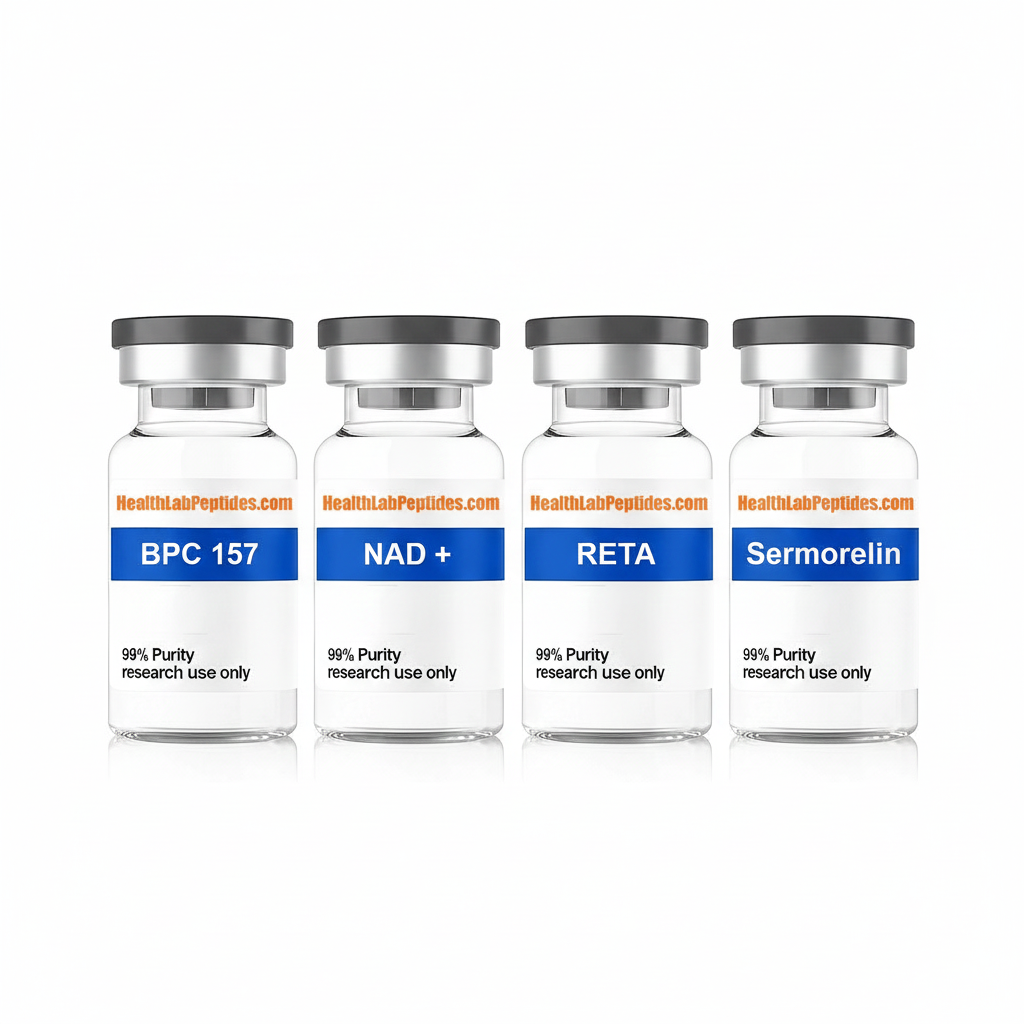
Peptide Quality Assurance & Pureness Screening Boc Scientific Researches
Peptide Purity Guide 98%, 99% & Research-grade Discussed Prg
A practical assay gauging downstream signaling-- or an architectural research study utilizing NMR or X-ray crystallography-- requires the highest pureness offered. Crystallographers in particular frequently call for ≥ 98% purity due to the fact that even small impurities can avoid crystal development or present condition right into the crystal latticework. As molecules exit the column, they travel through a detector-- normally a UV detector readied to 214 or 220 nm, wavelengths where the peptide bond soaks up light highly. The detector records just how much UV light is soaked up over time, generating a graph called a chromatogram. This guide breaks down what pureness actually means in peptide chemistry, exactly how it's measured, what the pollutants are, and exactly how to review the documents that verifies a peptide is what it asserts to be.Store Coa-verified Research Study Peptides
In easy terms, a peptide noted as 95% pure consists mainly of the target peptide (95%), with the staying ~ 5% made up of contaminations. These impurities can include points like shortened or truncated sequences, deletion variations, oxidized residues, or other small side-products from the synthesis procedure. Peptides are widely used in the clinical visual appeals, cosmetics, and biomedical fields as a result of their unique organic task and wide application possibility. However, the high quality of peptide products straight influences their performance and safety, making exact quality testing services crucial.
- HPLC separates a combination right into its specific elements based upon exactly how each molecule interacts with a specifically developed column.
- This overview breaks down what purity in fact indicates in peptide chemistry, how it's gauged, what the pollutants are, and exactly how to check out the paperwork that verifies a peptide is what it declares to be.
- For instances of product-level context, contrast the anticipated masses for Retatrutide, BPC-157, and Semaglutide.
- Mass spectrometry verifies molecular identification by inspecting whether the gauged mass matches the expected peptide mass.
- For example, a purity of 98% suggests that 98% of the peptide material is the intended product, while the other 2% might be undesired residues of synthesis (such as insufficient series or amino acid deletion variants).
- Deamidation is one factor storage conditions matter, especially after a peptide has been reconstituted.
What The Contaminations Really Are
Along with RP HPLC, our skilled researchers can likewise give details on the molecular weight of peptides figured out by mass spectrometry. Matrix-assisted laser desorption ionization time-of-flight mass spectrometry (MALDI-TOF MS) and electrospray ionization mass spectrometry (ESI MS) are both most commonly utilized techniques. This short article is offered instructional and research study reference objectives just. All peptides offered by Peak Lab are intended exclusively for in-vitro research laboratory research study usage and are except human consumption. Peptide testing paperwork should be interpreted as batch-level logical evidence for research material, not as clinical-use permission. Apex's Just how to Check out a Peptide COA overview walks through this procedure step by step.
The quality and reliability of a peptide purity dimension depend upon technique specifications and paperwork quality. The mobile phase, often a mix of water, acetonitrile, and an acid modifier, is saved in storage tanks and supplied via the system by a high-pressure pump. The pump keeps specific flow rates, frequently in the range of 0.5 to 2.0 mL/min relying on the approach and column style. High pressure compels the mobile stage through tightly packed particles inside the column, producing sharper splittings up and higher resolution than typical low-pressure chromatography.Together, these logical techniques supply the evidence base for ending that a peptide batch is suitable for research usage. One more relevant term you could run into is internet peptide content, which is various from pureness. Internet peptide material describes just how much real peptide (by weight) is in the vial relative to non-peptide components like water, counter-ions (e.g., TFA), or barrier salts. These can be particularly troublesome due to the fact that their chromatographic habits is extremely similar to the target peptide, making them tougher to separate during filtration. When a peptide is 98% pure, that staying 2% isn't arbitrary noise-- it's specific, recognizable kinds of by-products. Mass spectrometry determines the molecular weight of a compound with severe precision. For peptides, one of the most typical strategies are electrospray ionization (ESI-MS) and matrix-assisted laser desorption/ionization time-of-flight (MALDI-TOF). HPLC separates a mix right into its specific components based on just how each molecule communicates with a specially made column.